The Handwritten Heart: Finding Your Voice with the Love Letter Font
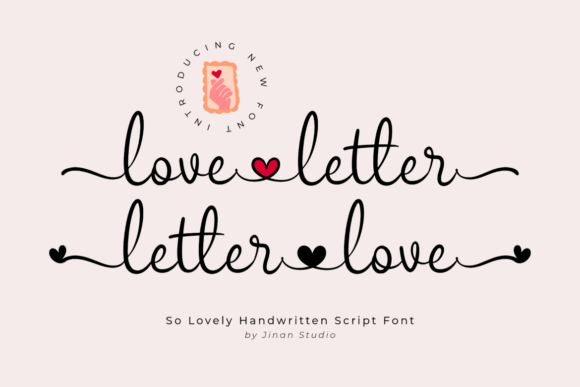
There is a specific feeling that comes with receiving a handwritten note in a world dominated by screens and rigid block text. It feels intimate, deliberate, and undeniably human. In design, capturing that warmth without sacrificing legibility is often the "holy grail" of typography. Enter the Love Letter typeface—a charming handwritten script that does more than just look pretty; it communicates emotion instantly. With its flowing strokes and whimsical heart details, this font bridges the gap between high-end elegance and playful affection. It is designed not just to be read, but to be felt, making it a powerful tool for anyone looking to inject personality into their visual communication.
More Than Just Curls: Understanding the Aesthetic
When you first look at a premium script font, it is easy to get distracted by the flourishes. However, the real value of the Love Letter font lies in its balance. Many decorative fonts fail because they prioritize style over substance, resulting in text that looks like a tangled mess. This typeface, however, maintains a rhythm in its baseline that keeps the eye moving forward. The "playful yet elegant curves" mentioned in its design philosophy are not just marketing fluff; they refer to the way the letters interact with one another.
The inclusion of "whimsical heart details" is particularly interesting. In many typefaces, such overtly romantic symbols can quickly cross the line into "kitsch" or juvenile territory. Here, they are integrated with a level of sophistication that suggests they are meant for a mature audience—think high-end wedding stationery rather than a child’s birthday card. The swashes add a sense of movement, mimicking the speed and pressure of a real fountain pen. This creates a texture on the page that flat, digital fonts simply cannot replicate. It brings a tactile quality to digital designs, making viewers feel as though they could reach out and touch the ink.
Practical Applications: From Screen to Shelf
As a designer or business owner, you are likely wondering how this specific aesthetic translates into revenue or engagement. The versatility of a handwritten font like this is surprisingly broad, provided it is applied with intent. It is not a body copy font; trying to read a paragraph of this script would be exhausting. Instead, it functions as a high-impact display font used for headlines, sub-headers, and accents.
Consider the realm of branding. If you are launching a boutique bakery, a wedding planning service, or a skincare line focused on organic, gentle ingredients, your visual identity needs to whisper "soft" and "personal." Love Letter serves as an excellent anchor for a logo design in these niches. It immediately sets a tone of care and attention to detail. When stamped on packaging, it transforms a simple box into a gift. It tells the customer that there is a human being behind the product, not just a faceless corporation.
For the digital space, specifically social media graphics and web design, this font acts as a pattern interrupt. Our eyes are accustomed to the clean, geometric lines of sans-serifs like Helvetica or Roboto. When a user is scrolling through a feed and encounters a headline written in a fluid, organic script, it stops the thumb. It creates a focal point. Use it for Instagram quotes, Pinterest pins, or the hero section of a landing page to draw attention to a specific value proposition. It pairs beautifully with clean, modern typography, creating a contrast that feels both contemporary and timeless.
Strategic Pairing and Readability
One of the most common mistakes in typography is isolation—choosing a font without considering what sits next to it. Love Letter is a script font, which means it has a lot of personality. If you pair it with another highly decorative font, the result will be visual noise. The golden rule of font pairing is contrast.
To make this typeface shine, pair it with a neutral, geometric sans serif font for your body text. Think of fonts like Montserrat, Lato, or Open Sans. These clean lines provide a solid foundation that allows the whimsical nature of the script to stand out without overwhelming the reader. Alternatively, for a more traditional or editorial look, you could pair it with a sturdy serif font like Garamond or Georgia. The sharp, structured serifs will complement the fluidity of the script, creating a sophisticated hierarchy.
Readability is paramount. Because Love Letter features connecting strokes and decorative swashes, it requires careful kerning and sufficient size to remain legible. Never use this font for small print, disclaimers, or long-form reading. Its job is to grab attention, not to deliver the fine print. When using it on posters or invitations, ensure the background is relatively uncluttered. A busy photo behind a script font is a recipe for illegibility. Always place it on solid colors or use a text overlay technique that ensures the letters remain crisp.
Streamlining Your Workflow: Accessibility and Licensing
For the working professional, efficiency is just as important as aesthetics. A significant feature of this typeface is its accessibility regarding swashes and alternates. Often, premium fonts come with beautiful extras that are hidden away in glyph panels, requiring you to dig through menus to find the perfect "tail" for a letter. The Love Letter font is designed so that these swash features can be easily accessed using only the keyboard. This is a massive time-saver for content creators who might not be experts in advanced typography software. It allows for quick customization, making every headline look unique without adding hours to your workflow.
Furthermore, if you are using this for commercial purposes—whether on merchandise, in marketing assets, or for client work—understanding the licensing is crucial. Always verify that the commercial font license covers your specific usage. Does it allow for print-on-demand? Can it be embedded in digital products? Treating typography as a professional design asset means respecting the intellectual property of the type designer, which in turn protects your business from legal headaches down the road.
Elevating the Narrative
Ultimately, typography is storytelling. The fonts you choose for your brand identity or your next editorial design project speak volumes before a single word is read. By incorporating a typeface like Love Letter, you are making a conscious decision to prioritize warmth, romance, and human connection. It is a tool that works hard to make your designs feel effortless, turning standard text into a visual embrace. Whether you are crafting a wedding vow, designing a product label, or creating a social media campaign, this font offers a distinct voice that is hard to ignore.