Ornamental Flourishes: Styling with Vintage Corners
There is a specific moment in design where a layout feels almost complete, yet somehow hollow. You have the perfect serif typeface for the headings, a clean sans serif for the body copy, and high-resolution imagery, but the composition lacks a certain "finished" quality. It feels like a room without crown molding or a suit without a pocket square. This is often the struggle for designers and entrepreneurs aiming for a sophisticated, timeless aesthetic. We spend hours curating palettes and kerning text, only to miss the small details that separate amateur work from professional artistry. If you have ever found yourself staring at a business card, wedding invitation, or website header thinking it needs just a little extra "something," the solution might not be another image or a bolder color, but rather the subtle art of ornamentation.
The Language of Ornamental Typography
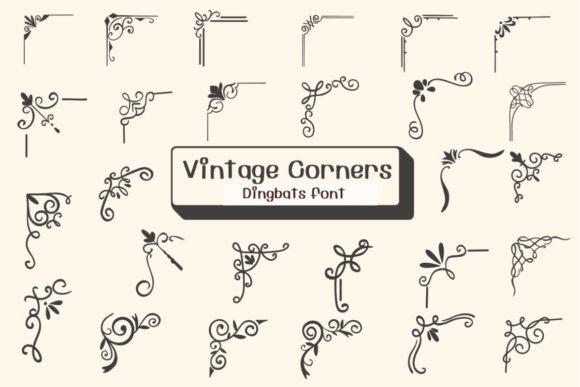
Enter the world of decorative dingbats, specifically the Vintage Corners typeface. While the term "dingbat" might sound unglamorous, referring to these assets as mere "symbols" does them a disservice. Think of them instead as digital filigree. Vintage Corners is a specialized collection of ornamental elements designed to sit at the intersections of your layout, framing content with the kind of intricate detailing found in antique bookplates and Victorian stationery. It is a premium font in the sense that it offers scalable vector assets, meaning you can resize them from a tiny label to a massive billboard without losing a pixel of quality.
The visual appeal of this typeface lies in its diversity. It doesn't just offer one style of swirl; it provides a library of motifs ranging from heavy, architectural bracket shapes to delicate, botanical tendrils. For the designer working on a brand identity, this is crucial. A luxury soap brand might need soft, floral curves to communicate gentleness, while a high-end whiskey label might require rigid, geometric filigree to suggest strength and tradition. Vintage Corners allows you to navigate these nuances easily, offering a toolkit that adapts to the specific emotional tone of your project.
Practical Applications: Beyond the Wedding Invite
When we hear "vintage" or "ornamental," our minds often jump immediately to wedding invitations or certificates. While Vintage Corners certainly excels in these areas, its utility extends far beyond the realm of stationery. In modern graphic design, there is a resurgence of "Grandmillennial" and Art Deco aesthetics. We are seeing these detailed motifs pop up in unexpected places, bridging the gap between old-world charm and contemporary minimalism.
Consider packaging design for a small business. If you are selling artisanal chocolates or handmade candles, the unboxing experience is part of your product. Using a script font for the product name is standard, but framing that name with a delicate corner ornament instantly elevates the perceived value. It suggests care, craftsmanship, and attention to detail—qualities you want associated with your product before the customer even opens the box.
Similarly, in the realm of digital products and social media, standing out is difficult. A generic Instagram template gets scrolled past. However, a quote graphic or a product announcement framed with vintage vector assets creates a visual pause. It draws the eye inward, focusing the viewer's attention on the message. For bloggers and content creators, using these elements in your editorial design can create a signature look that improves brand recognition. When readers see those specific corner flourishes, they subconsciously recognize your content before even reading the headline.
Integrating Vintage Elements into Modern Branding
The challenge with using a decorative font like Vintage Corners is ensuring it complements rather than overwhelms. This is where the strategy of font pairing comes into play. Because the corner elements are highly detailed, they generally pair best with cleaner typography. If you pair ornate corners with an equally ornate script font, the result can look cluttered and illegible. Instead, try using these corners to frame a bold, modern serif or a clean sans serif font. The contrast between the rigid, structured text and the flowing, organic ornament creates a dynamic visual tension that feels both fresh and nostalgic.
For logo design, restraint is key. You might not want to use the corners as the primary mark, but rather as a container for a wordmark. Imagine a bakery logo where the name is typed in a friendly handwritten font, but the entire logo is "held" by two gentle, swirly brackets from the Vintage Corners collection. This adds a layer of professionalism that a standalone text logo often lacks. It turns a simple word into a crest or a seal.
Furthermore, think about the physical application of your branding. If you are designing merchandise like tote bags or t-shirts, intricate details can sometimes get lost in the printing process depending on the material. However, because Vintage Corners provides bold, high-contrast filigree options alongside the finer lines, you can choose a style that holds up well on fabric. The scalability of the vector assets ensures that whether you are printing a small logo on a pen or a large graphic on a poster, the integrity of the design remains intact.
Navigating Design Decisions and Licensing
Before you download and start placing swirls everywhere, it is helpful to review the specific styles included in the typeface file. Most premium font packs like this include multiple variations—perhaps a lighter, more airy style for subtle backgrounds and a heavier, darker style for prominent framing. Taking ten minutes to scroll through the character map (using a tool like Adobe Illustrator’s Glyphs panel or a free online font viewer) can save you hours of frustration later. You might find that a specific "T" or "L" shaped corner exists that perfectly fits a layout you are struggling with.
Another practical consideration is commercial licensing. If you are a small business owner or a freelancer, you must ensure your assets are cleared for commercial use. Most reputable font marketplaces that sell assets like Vintage Corners provide a license that covers both personal and commercial projects, such as client work, merchandise, and digital products. However, it is always worth double-checking the End User License Agreement (EULA), particularly if you plan to embed the font in an app or a website builder where the file is accessible to the public. Understanding these terms protects your business and ensures you are using the design assets ethically.
Ultimately, the goal of using a typeface like Vintage Corners is to communicate a specific vibe: sophistication, tradition, and quality. It is about visual consistency. By using these corner elements across your website headers, your invoice templates, and your social media graphics, you weave a common thread through all your touchpoints. This consistency builds trust with your audience. They see a brand that cares about presentation, which translates into a brand that cares about its customers.
Whether you are designing a vintage-themed wedding suite, branding a new boutique, or simply looking to add a touch of elegance to your personal blog, having a library of ornamental corners is an invaluable asset. It bridges the gap between a layout that looks "done" and one that looks "designed." It proves that in typography, sometimes the most powerful statements are made in the margins.