Open Book: A Charming Typeface for Literary and Educational Projects
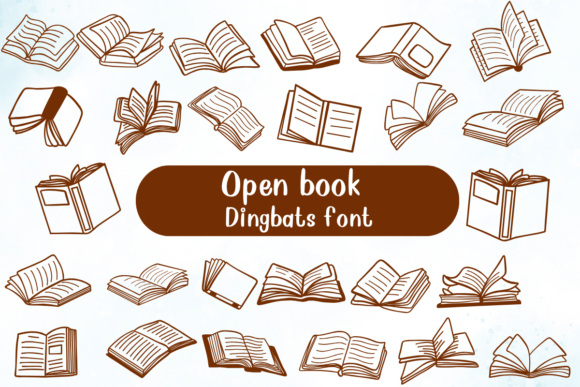
There’s something undeniably warm and inviting about the image of an open book. It symbolizes knowledge, discovery, and the quiet joy of reading. Now, imagine capturing that feeling in a typeface. That’s exactly what the Open Book font achieves. It’s not a traditional letter-based font, but a clever and charming dingbat collection where each keystroke produces a unique, hand-drawn illustration of an open book. For designers, educators, authors, and anyone working on book-themed projects, this isn’t just a novelty—it’s a versatile design asset that adds instant personality and a delightful literary touch.
More Than Just Symbols: The Visual Appeal of a Thematic Icon Set
What sets Open Book apart from other decorative fonts or icon libraries is its cohesive, handcrafted aesthetic. Every illustration in the set shares the same whimsical, sketch-like style, ensuring visual harmony across any project. You won’t find sterile, uniform vector graphics here. Instead, each book icon has its own character—slightly different angles, varied page textures, and playful details like bookmarks or reading glasses. This hand-drawn quality brings a human, authentic feel that resonates with audiences. It’s perfect for projects where you want to avoid the cold, overly digital look and instead foster a sense of warmth, approachability, and creativity. Think of it as a premium font alternative specifically for thematic illustration, offering the consistency of a typeface with the charm of custom artwork.
Practical Applications: Where This Creative Font Truly Shines
The true value of a design asset like Open Book lies in its application. Its utility extends far beyond simply decorating a document. For branding and logo design, it can serve as a brilliant secondary element. Imagine a logo for a children’s bookstore, a literacy nonprofit, or an author’s personal brand that incorporates a small, stylized open book icon as a consistent motif. This builds immediate brand recognition and communicates the core mission without a single word.
In packaging design, especially for products like journals, bookmarks, artisanal teas marketed to readers, or subscription book boxes, these icons can be used as repeating patterns, standalone graphics, or elegant accents on labels and boxes. They instantly signal the product’s theme and appeal directly to the target audience. For editorial layouts in magazines, blogs, or yearbooks, the icons work wonderfully as bullet points for reading lists, section dividers, or decorative elements in margins, adding a layer of visual interest that plain text cannot.
Digital creators will find endless uses. Social media graphics for bookstagrammers, literary podcasts, or online book clubs gain a professional, thematic flair when using these icons as profile accents, story highlights, or post decorations. They can make a simple quote graphic or reading update visually engaging and on-brand. For websites and blogs, particularly those focused on reviews, author news, or educational content, the icons can enhance navigation menus, categorize content (e.g., different book icons for fiction, non-fiction, children’s), or decorate headers and footers.
Enhancing Your Design Strategy with Thematic Typography
Integrating a specialized typeface like Open Book into your workflow does more than just decorate; it can significantly improve your project's effectiveness. Visual consistency is key in professional design. By using the same set of cohesive icons across your website, social media, print materials, and merchandise, you create a unified visual language. This strengthens your brand identity, making it more memorable and recognizable. When a reader sees that consistent, charming book illustration on your Instagram post, your website header, and your business card, they immediately connect all those touchpoints.
Furthermore, thematic elements can boost audience engagement. A well-placed, relevant icon can break up text, draw the eye to important information, and make content more digestible and enjoyable to consume. It shows attention to detail and an understanding of your audience’s interests, which builds trust and connection. For a teacher creating classroom materials, using Open Book icons can make worksheets and reading charts more appealing to students. For an entrepreneur selling bookish merchandise, these icons become part of the product’s appeal.
Smart Integration: Pairing and Practical Considerations
Using a dingbat font effectively requires a bit of strategy. First, choose the right context. Open Book is a display font in the truest sense—it’s for impact and illustration, not for setting body text. Its strength is in accents, logos, and graphic elements. Pair it wisely with your primary typefaces. A clean, modern sans-serif font or a classic serif font makes an excellent companion, providing the readability for your main text while the Open Book icons provide thematic flair. Avoid pairing it with other highly decorative or script fonts, which can create visual clutter.
Always test your pairings in the context of your actual project. Create a mockup of your social media graphic or your product label to see how the icon size, color, and spacing work with your text and overall layout. Consider the readability of your overall design; the icons should enhance, not overwhelm. Since the icons are detailed sketches, they work best at larger sizes where their hand-drawn qualities can be appreciated. At very small sizes, they might lose definition.
Finally, be mindful of licensing. While many creative fonts are available for free for personal use, commercial projects—like client work, products for sale, or monetized content—typically require a commercial license. Always check the specific license terms of the Open Book font you acquire to ensure it covers your intended use, whether for print, digital, merchandise, or broadcast. This protects you legally and supports the type designers who create these valuable assets.
Ultimately, Open Book is more than a novelty; it’s a specialized tool for visual storytelling. It provides a quick, consistent, and charming way to inject a love of reading and learning into your designs. Whether you’re crafting an identity for a new brand, designing engaging educational content, or creating products for fellow book lovers, this collection of hand-drawn icons offers a simple yet powerful way to connect with your audience on a thematic level. It proves that sometimes, the most effective design elements are those that tell a story all on their own.