Aristoreva: Crafting Timeless Brand Narratives with Victorian Charm
There is a specific feeling you get when you walk into a shop that has maintained its original tin ceilings and wooden floors, or when you pick up a hardcover book with gold-leaf lettering on the spine. It is a sense of history, weight, and authenticity. In the fast-paced digital world, where trends shift weekly, that feeling of permanence is becoming a rare and valuable commodity for brands. If you are looking to evoke that sense of heritage and craftsmanship in your own work, typography is your most powerful tool. This is where Aristoreva enters the conversation—a decorative vintage font that doesn't just mimic the past but invites it to collaborate with your modern designs.
The Visual Language of the 19th Century
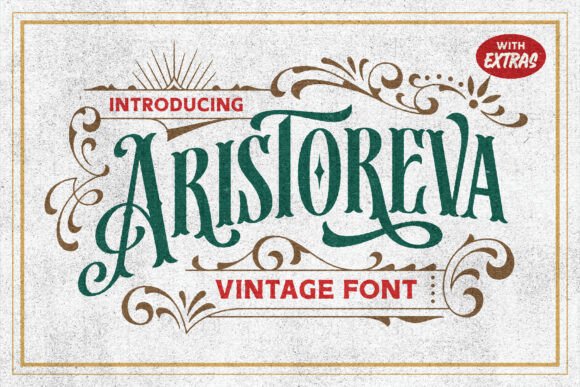
Aristoreva is not merely a set of characters; it is a curated collection of visual cues drawn from the height of Victorian typography and the organic elegance of Art Nouveau. When you look at the reference points for this font—vintage signage, old badges, and classic logos—you see a time when typography was an art form meant to be admired. The font captures the "medium-detailed ornament" aesthetic perfectly. It avoids the trap of being too busy or illegible, while still offering enough intricate swashes and flourishes to demand attention.
What makes this display font particularly effective is its ability to tell a story instantly. In modern branding, we talk a lot about "visual shorthand"—how quickly can a customer understand who you are? A serif font might say "reliable," and a sans-serif might say "efficient," but a typeface like Aristoreva says "artisanal," "curated," and "established." It carries the DNA of 19th-century graphics, which makes it an ideal choice if you want to project an image of a business that values tradition and quality over fleeting trends.
Strategic Applications for Modern Creators
Understanding the font's personality is one thing; applying it effectively is another. Because Aristoreva is a condensed, large-display typeface, it has specific strengths that play well across various media. It is designed to stand out, meaning it is not the font for your legal disclaimers or body copy, but rather the hero of your visual hierarchy.
Consider the realm of packaging design. If you are a small business owner selling artisanal coffee, handmade soaps, or craft spirits, the label is your handshake with the customer. Aristoreva allows you to create a label that feels like it has a history, even if your brand launched last month. The included bonus ornaments can be used to frame your product name, creating a badge-like effect that suggests premium quality.
For those in the digital space, specifically social media managers and content creators, the font serves as a powerful hook for Instagram graphics or Pinterest pins. When scrolling through a feed dominated by clean, minimalist sans-serifs, a textured, vintage display font creates a pattern interrupt. It stops the scroll. It works exceptionally well for quote graphics, podcast cover art, or headers for lifestyle blogs that focus on travel, history, or vintage fashion.
Furthermore, the application extends beautifully into merchandise and apparel. T-shirt design often relies on typography that looks good distressed or enlarged. Aristoreva’s structure, inspired by vintage signage, holds up incredibly well when scaled up for merchandise. It provides that "band poster" or "vintage brewery" aesthetic that remains perennially popular in streetwear and casual fashion.
Bridging the Gap Between Ornament and Readability
One of the biggest challenges with decorative fonts is legibility. It is easy to get lost in the beauty of a swash and forget that the text needs to be read. Aristoreva navigates this by maintaining a strong structural foundation beneath the ornamentation. The letterforms are distinct, ensuring that while the font is decorative, it remains functional for short, punchy headlines.
However, using a font like this requires a bit of strategic restraint. A common mistake in graphic design is over-complication. If you use Aristoreva for your logo, your headline, and your sub-headline, the design will likely feel cluttered. The best practice is to let Aristoreva do the heavy lifting for the main attraction—such as a logo mark or a poster title—and then pair it with something much quieter.
Think of Aristoreva as the lead singer of a band. It needs a rhythm section to support it. Pairing it with a clean, geometric sans-serif for your body text creates a beautiful contrast between the ornate and the modern. This juxtaposition actually makes the vintage elements pop even more. For example, using Aristoreva for a "Sale" header on a website, followed by a clean Helvetica or Open Sans for the details, balances the visual weight and ensures the user experience remains smooth.
Practical Considerations for Professional Use
When integrating a new asset into your workflow, especially a commercial font, there are a few practicalities to keep in mind to ensure you get the most out of your investment and maintain a professional standard.
Testing Your Pairings: Before committing to Aristoreva for a major rebrand or a large print run, test it in context. Place it next to your existing brand colors and imagery. Does the vintage vibe clash with your photography style? Or does it enhance it? Sometimes, a font looks great in isolation but fights with the other elements on the page.
Reviewing the Styles: A high-quality premium font often comes with variations and extras. Take the time to look at the full character map of Aristoreva. Look for the additional swashes and ornaments mentioned. Often, these small decorative additions are what elevate a design from "good" to "custom." You might find a specific ligature or tail that perfectly connects two letters in your brand name, creating a unique monogram that no one else has.
Licensing and Scalability: Always review the licensing terms of the font. If you are a freelancer creating logos for clients, ensure the license covers commercial use and allows for the font to be embedded in digital assets or converted to outlines for print. This is a non-negotiable part of professional graphic design that protects both you and your client.
Revitalizing Your Visual Identity
Ultimately, the tools we choose say as much about us as the work we produce. Choosing a typeface like Aristoreva is a deliberate decision to embrace character, history, and a touch of theatricality. It is for the designer who wants to move away from the homogenized look of modern web design and offer something with more texture and soul.
Whether you are designing a book cover for a historical fiction novel, branding a distillery, or creating a header for a vintage car enthusiast blog, this font provides a ready-made foundation of elegance. It takes the heavy lifting out of "creating" a vintage vibe because the DNA of the 19th century is already baked into the curves and serifs. By pairing it thoughtfully and using it to highlight your most important messages, you can transform a standard project into a memorable visual experience. Aristoreva isn't just a typeface; it is a bridge between the craftsmanship of the past and the creativity of the present.